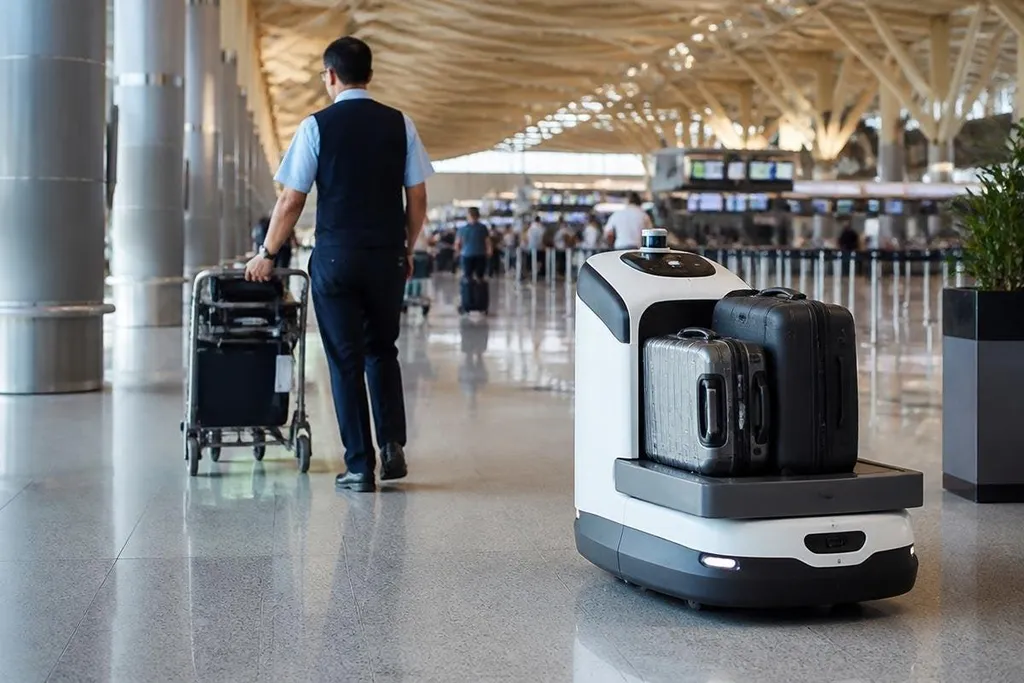
An airport robot has to do more than move through a terminal. It must complete a useful task around people, luggage, vehicles, security rules, and changing routes without creating extra work for staff.
The future will depend less on robot shape and more on proof from daily airport operations.
- Useful work: Carrying, cleaning, guiding, checking, or inspecting must save staff time.
- Safe movement: The robot must stop, reroute, and recover around people and baggage carts.
- Clear ownership: Airport teams need to know who runs it, fixes it, and takes over when it stops.
The first test is useful work
Airports have many tasks that look suitable for automation. A robot could move supplies, carry luggage, clean floors, guide passengers, or inspect areas after hours.
Each task has a different payload, route, speed, and risk, so one robot design won't fit every job. The useful question is narrow: what work can the robot complete from start to finish?
A machine that carries a load halfway across a terminal still needs a person to receive it, check it, and move it the rest of the way. That may add steps instead of removing them.
An airport also needs clear results. The test should record how many trips the robot completes, how often a person steps in, how long it waits at lifts or doors, and what happens when its battery runs low. Without those figures, a smooth demonstration says little about a full shift.
Safety comes before autonomy
Autonomy means the robot makes some decisions without constant remote control. In a terminal, that decision-making must include people who stop suddenly, children who change direction, bags left in walkways, and staff moving heavy carts.
A safe system needs more than obstacle detection. It needs a visible stop control, a clear speed limit, a remote operator, and a plan for blocked routes. The airport must also know what the robot records, where that data goes, and how long it stays there.
Safe stopping still leaves a work tool if staff can't restart it quickly. For that reason, training and recovery steps belong in the trial from the first day. The person called to help should not need a software engineer for every minor fault.
An airport trial should record how long a robot takes to resume after a stop, not only whether it avoids people. Reports from Robot24 can connect that recovery time with the named machine, test site, and task, giving airport staff a fair basis for the limits that follow.
Airports add hard limits
Terminals are difficult places for mobile robots. Routes can change because of construction, crowds, weather, security checks, or a closed lift. Floor surfaces can vary too, which affects wheels, sensors, and stopping distance.
The robot must also fit the airport's existing systems. Doors, lifts, charging points, baggage areas, and staff procedures all matter. A machine that needs a special route or a dedicated person may work in a controlled trial, then lose its value when the airport changes its layout.
Battery work is another practical limit. The airport needs a charging plan, a spare-battery plan, or a work schedule that accepts downtime. Runtime should be measured against the task, not quoted by itself. Long battery life still falls short if the payload is too small for the job.
The strongest opposing view is that airports can start with small, controlled tasks and expand later. That makes sense, but only when each step produces records that justify the next one. A trial should grow because the numbers hold up, not because the robot looks ready in a video.
A buying checklist
Before an airport team approves a pilot, it should ask for clear answers:
- Name the task: What load, route, or inspection will the robot handle?
- Set the measure: How many completed jobs count as a useful result?
- Record staff time: How often will a person guide, reset, load, or unload it?
- Check failure recovery: Who responds when a sensor, motor, door, or network link fails?
- Set data rules: What does the robot record, and who can access those records?
- Price the whole job: Include charging, training, repairs, supervision, and changes to the site.
Those answers also show what remains unproven. The system may move well in one terminal and still need more work on busy routes, shared lifts, or mixed baggage traffic. The airport should keep the pilot narrow until those gaps have measured answers.
I'd wait for a published trial record before calling any airport robot ready for broad use. The next useful milestone is not a larger machine or a longer demonstration; it's a repeatable task completed with fewer staff interventions, clear safety records, and a cost the airport can defend.